SPECIAL SESSION #04
Relative State Estimation and Sensing for Multi-Satellite Systems
ORGANIZED BY
 Alex Caon
Alex Caon
Faculty of Aerospace Engineering, Delft University of Technology
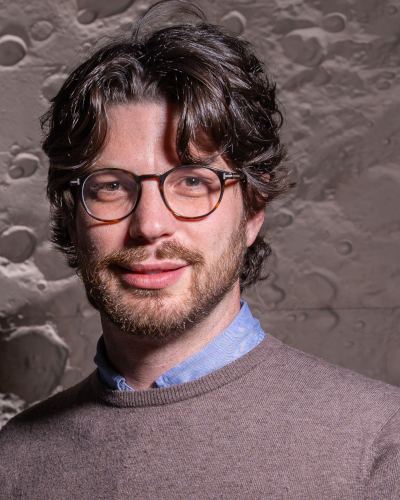 Stefano Silvestrini
Stefano Silvestrini
Aerospace Science and Technology Department, Polytechnic of Milan, Italy
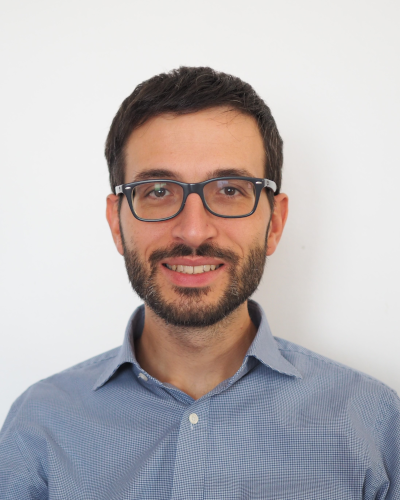 Francesco Branz
Francesco Branz
Department of Industrial Engineering, University of Padova, Italy
SPECIAL SESSION DESCRIPTION
The rapid evolution of space missions increasingly depends on multi-satellite systems, which enable a wide range of advanced applications: rendezvous and docking, satellite constellations, in-orbit servicing, assembly and manufacturing, inspection, active debris removal, and Earth observation. These missions demand high levels of coordination, achievable only through accurate knowledge of the relative state of each satellite involved.
Relative state estimation involves measuring orbital position and attitude, which are crucial for various space operations, including robotic manipulation, spacecraft inspection, cluster coordination, and formation flying. Achieving this requires advanced sensing technologies, robust estimation algorithms, and reliable validation methods.
TOPICS
This special session invites contributions that push the boundaries of sensors, estimation techniques, and experimental validation for multi-satellite systems. Topics of interest include, but are not limited to:
- Novel sensors and sensing architectures for relative state measurement;
- Estimation algorithms for attitude and position in multi-satellite scenarios;
- Cooperative navigation and control strategies;
- Integration of vision-based and GNSS-based techniques;
- Simulation frameworks and testbeds for multi-satellite coordination;
- Laboratory experiments and hardware-in-the-loop testing;
- Applications to space robotics, debris removal, and in-orbit servicing.
The session aims to foster discussion on theoretical advancements, practical implementations, and experimental validation, bridging the gap between concept and deployment. Researchers, engineers, and practitioners are encouraged to submit papers that contribute to innovative solutions and future directions in this critical domain.
ABOUT THE ORGANIZERS
Alex Caon is a postdoctoral researcher at the Aerospace Faculty of Delft University of Technology, where he also is lecturer on Guidance, Navigation, and Control (GNC) for multi-satellite systems. He earned his Ph.D. from the University of Padova with a focus on capture and docking technologies. He has contributed to ESA missions on rendezvous, docking, and in-orbit assembly, as well as projects for the Netherlands Space Office involving large constellations. His research centers on robotic GNC for In-Orbit Servicing, autonomy in distributed satellite systems, and ground-based verification and validation facilities. Combining simulation and experimental testing, he develops integrated software and hardware solutions for advanced satellite applications.
Stefano Silvestrini is Assistant Professor at the Aerospace Science and Technology Department of Politecnico di Milano. He obtained his PhD cum laude with a thesis titled "AI-augmented Guidance, Navigation and Control for Proximity Operations of Distributed Systems". He has been involved in national and EU/ESA-funded projects for developing nanosats constellation for science observation, mission analysis and navigation design for fractionated space architecture and AI for spacecraft GNC. His research interests include the development of Artificial Intelligence algorithms for autonomous GNC in distributed space systems and proximity operations, particularly tailored for embedded applications in small platforms. He is the author or co-author of more than 60 technical papers published in indexed journals and conference proceedings. Moreover, he is author and editor of the book “Modern Spacecraft Guidance, Navigation, and Control: From System Modeling to AI and Innovative Applications”, published by Elsevier.
Dr. Francesco Branz is an Assistant Professor in Aerospace Equipment and Systems and at the Department of Industrial Engineering, University of Padova. His research focuses on space robotic systems, CubeSat technologies, relative navigation sensors, docking mechanisms, and optical communication. Dr. Branz has contributed to numerous national and international research projects. Currently, he serves as the technical leader for the development of the docking system for the Space Rider Observer Cube (SROC) microsat mission (ESA funded), and the development of a multifunctional capture interface for space manipulators (ASI funded). He is co-author of 70+ indexed publications in the field.