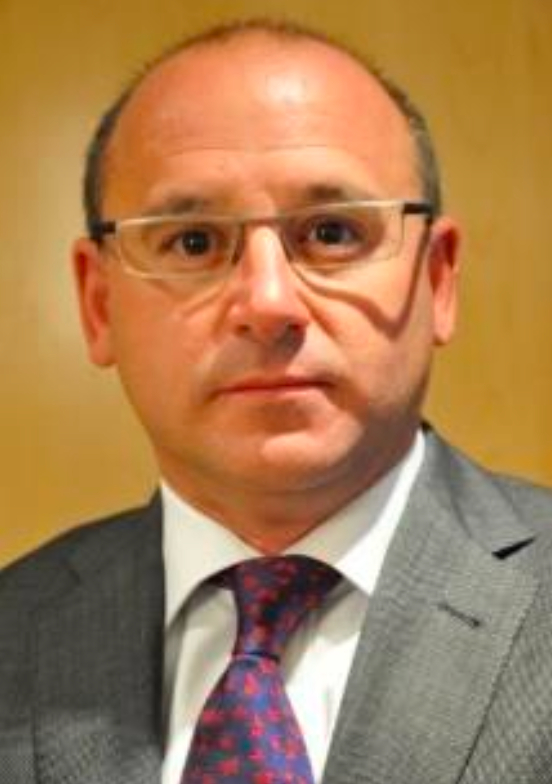
 Alberto P. Martinez Borja
KEYNOTE LECTURE
Manned-Unmanned Teaming - The "Future" of Air Superiority
Alberto P. Martinez Borja
HO Air Power Integrated Portfolio & CapEx (AIRBUS SAU)
ABSTRACT
AIRBUS strategic vision for Unmanned Aircraft Systems (UAS) is defined by three core pillars: cutting-edge technologies, robust life-cycle support, and a diversified product portfolio. The paramount driver for achieving future air superiority is Manned-Unmanned Teaming (MuT), a paradigm shift engineered to dramatically enhance mission efficiency and minimize human operational risk.
Realizing this MuT capability is intrinsically linked to full autonomy, which offers enhanced safety envelopes, optimized mission performance, and unlocks entirely new operational concepts. Artificial Intelligence (AI) serves as the fundamental technology underpinning this autonomy; however, achieving trustworthiness and certifiability in AI is paramount for safe, widespread deployment across the aerospace domain.
The industry is rapidly advancing in decision-making techniques and enhanced perception methodologies. These two critical functional blocks face significant regulatory and operational challenges, particularly in certification, managing complex and contested environments, and seamlessly integrating advanced Human- Machine Teaming (HMT) interfaces. While full autonomous operations are rapidly progressing, they have not yet reached universal deployment.
This presentation underscores AIRBUS commitment to advancing these teaming capabilities, empowering assets to operate as a cohesive System of Systems (SoS). We will detail platform-agnostic solutions, such as the MARS mission system, which embody this future-focused approach. AIRBUS comprehensive UAS product portfolio ranging from tactical systems like Aliaca and SIRTAP to strategic assets like the European Eurodrone (MALE) and the ultra-persistent HAPS Zephyr demonstrates a stepped approach designed to satisfy highly diverse customer mission needs.
SPEAKER BIOGRAPHY
Prof.- Dr. Alberto P. Martínez Borja is currently HO Integrated Portfolio & CapEx in Air Power at AIRBUS Defence & Space.
Martínez-Borja began his aerospace career in 1991 at Boeing Defense & Space Division as system engineer for helicopter programs in Philadelphia (USA). In 1993, Alberto returned to Europe as Spanish National Airworthiness Authority (NAAR) for the FCS of EF-2000 at the Spanish National Aerospace Agency (INTA). In parallel, he became staff project engineer at the Guidance & Control Lab with management responsibilities for all UAS Programs.
In 2001 Martínez-Borja joint EADS as Technical responsible for the future UAS Programs to be developed at DS in Spain. In particular, he contributed to the UCAV Program Barracuda as Program Manager and managed with the Spanish MoD the successful first flight in Spain on 2nd April 2006.
From 2011 to 2015 he was Chief Engineer and Head of the ATLANTE TUAS Program in the PMO of AIRBUS DS leading the end-2-end first UAS CAT2 development in Europe certified for flight in segregated airspace. Since 2018, he leads the Air Power Portfolio Management organization being accountable for the overall R&D & CapEx investments aiming for the Air Power portfolio development in both products and services.
Alberto P. Martínez Borja graduated from ETSIA Madrid in 1990 with a master’s degree in aerospace engineering. He also earned a master’s degree in business administration from Widener University (Pennsylvania) in 1992, and went on to earn a Ph.D. in aerospace engineering from ETSIA, Madrid in 2003.