SPECIAL SESSION #09
Terahertz Technologies for Next-Generation Aerospace Communications and Sensing
ORGANIZED BY
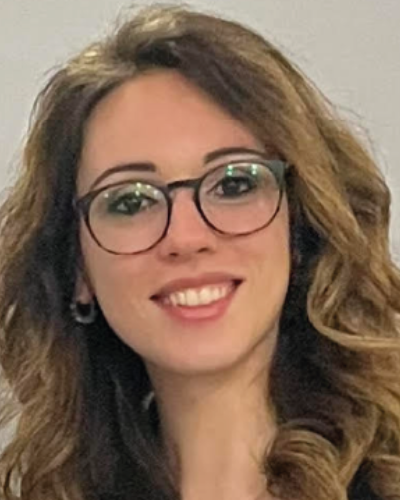 Ilaria Marasco
Ilaria Marasco
Polytechnic University of Bari, Italy
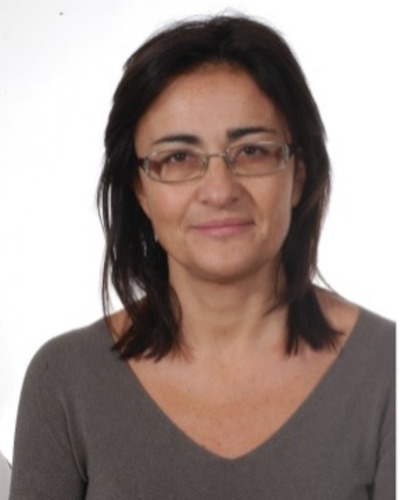 Ermestina Cianca
Ermestina Cianca
University of Rome Tor Vergata, Italy
SPECIAL SESSION DESCRIPTION
The rapid evolution of aerospace systems demands innovative solutions capable of supporting extremely high–data-rate communications, enhanced sensing capabilities, and advanced electromagnetic control. In this context, the use of Terahertz (THz) frequency bands is attracting growing interest. THz links can satisfy the stringent bandwidth requirements of next-generation systems while offering balanced trade-offs compared to optical communication technologies. Moreover, they hold strong potential for improved sensing and localization accuracy.
Despite these advantages, the adoption of THz bands in aerospace applications still faces significant challenges that span multiple disciplines, including electronics, electromagnetics, and telecommunications.
This Special Session aims to provide a platform for fruitful discussions among experts from these diverse fields. It welcomes contributions in electromagnetic field theory, wireless communication, electronic devices, and aerospace system technologies. Topics of interest include new analytical and numerical EM models, innovative antenna and metasurface designs, THz channel characterization, and novel communication waveforms and system-level architectures. Particular emphasis is placed on the interplay between electromagnetic phenomena and communication performance, addressing challenges related to THz propagation, hardware integration, and the deployment of intelligent metasurfaces for robust and efficient aeronautical and space communication networks.
TOPICS
The topics of the session include, but are not limited to:
- Design and modeling of intelligent metasurfaces and RIS for aerospace platforms;
- THz electromagnetic propagation, scattering, and channel characterization;
- Advanced materials (graphene, 2D materials, tunable substrates) for EM reconfigurability;
- Integration of metasurfaces on aircraft fuselage, satellites, UAVs, and space habitat structures;
- EM field manipulation for beam steering, reflection control, and wavefront shaping;
- Electromagnetic simulation and measurement techniques at THz frequencies;
- Intersatellite and inter-drone THz links;
- Channel models and link budget analysis for THz air-to-ground, satellite, and inter-satellite communication;
- RIS-assisted wireless networks for improved coverage, reliability, and spectrum efficiency;
- Joint communication–sensing (JCS) and joint communication–radar (JCR) techniques in THz bands;
- System-level architectures combining RIS, beamforming, and THz transceivers.
ABOUT THE ORGANIZERS
Ilaria Marasco (Member, IEEE) received the master’s degree (summa cum laude) in telecommunication engineering from the Politecnico di Bari, Italy, in October 2019, and the Ph.D. degree from the nPEG-Laboratory in collaboration with the Istituto Italiano di Tecnologia (IIT), Arnesano, Italy, in 2022.
She is currently an Assistant Professor in electromagnetic fields with the Politecnico di Bari. Her main research interests include design and fabrication of flexible and compact antennas on wearable and biodegradable substrates and microwave devices, graphene-based antennas and reconfigurable intelligent surfaces, UAV-aided metasurfaces, and free space optics.
Ermestina Cianca she is Associate Professor at the Dept. of Electronic Engineering, University of Rome Tor Vergata, where she teaches: Internet of Things - Principles and Applications; Digital Communications; Internet delle Cose. She has been: Assistant Professor since 2003 in the same University up to 2019; employed by Aalborg University, Denmark, as Research engineer (2000-2001) and as Assistant Professor (2001-2003) in the Wireless Networking Groups (WING). She is the Director of the M.Sc. on “Engineering and International Space Law in Communication, Navigation and Sensing via satellite. She is vice-Director of the Interdepartmental research center CTIF (Center for TeleInFrastructures) at the University of Rome “Tor Vergata”. She has participated to several European and national projects. She has been responsible for the University of Rome Tor Vergata activities in several Italian Space Agency and ESA projects. She is author of more than 160 papers published on international journal and conference proceedings.