SPECIAL SESSION #16
Human in the loop for Aerial Systems
ORGANIZED BY
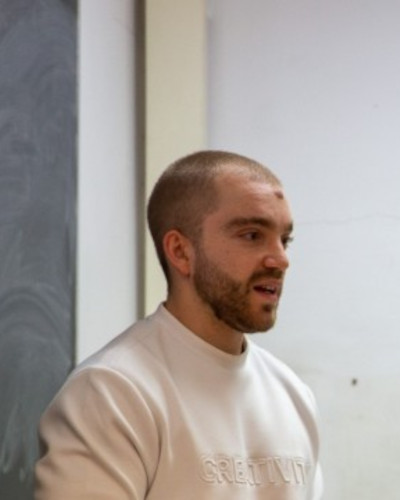 Raúl Fernández Matellán
Raúl Fernández Matellán
Carlos III University of Madrid
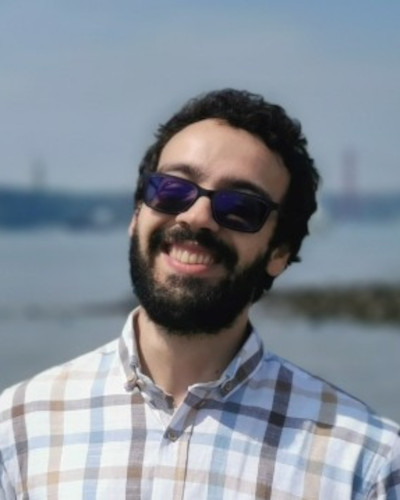 David Yagüe
David Yagüe
Carlos III University of Madrid
 Grazia Iadarola
Grazia Iadarola
Polytechnic University of Marche, Italy
SPECIAL SESSION DESCRIPTION
This Special Session is dedicated to the operational challenge of keeping humans effectively engaged in the decision and action loop within aerial environments. Regardless of whether an aerial platform is manually piloted, remotely operated, or fully autonomous, the critical success factor remains the seamless integration of human judgment with machine capabilities. The central question we address is how to design systems where the human operator is an active, effective participant in the control loop.
To achieve this, we focus on intelligent infrastructure as the essential operational layer that "closes the loop." Instead of focusing on simple connectivity, we explore how infrastructure mediates the interaction: routing information to specific human roles, enforcing constraints, and managing multi-actor coordination. This mediation is what transforms aerial mobility into a tool for human-centered intervention.
Within this framework, we specifically invite contributions that address the loop from different perspectives: approaches where the infrastructure governs the process logic, measuring the quality and communicate with the human to verify system performance or make decisions; or approaches utilizing human sensing technologies, where physiological and cognitive models (e.g., workload, fatigue, attention) allow dynamically estimate operator readiness and adapt interaction strategies in real-time.
We welcome papers proposing methods to model, measure, and design these interactions, aiming to turn aerial systems into trusted, responsive partners in complex operations.
TOPICS
Topics of interest include but are not restricted to:
- Artificial Intelligence for behavioral monitoring of pilots (pilot readiness and workload);
- Integration of human-state monitoring into UAV autonomy;
- Physiological and cognitive sensing for pilot-state assessment;
- Symbiotic human–AI teaming: adaptive autonomy, task allocation, and interface adaptation for safe re-engagement;
- Intelligent infrastructure for human intervention: role-aware alerting, escalation policies, and multi-actor coordination;
- Resilient information pathways: context-aware prioritization and traceable decision support.
ABOUT THE ORGANIZERS
Raúl Fernández Matellán received his B.Sc. in Electronic Engineering and Automation from the University of León in 2022 and his M.Sc. in Robotics Engineering and Automation from Universidad Carlos III de Madrid (UC3M) in 2024. After a research fellowship funded by the Spanish Government, he began his Ph.D. in Systems Engineering and Automation at UC3M, where he is currently a doctoral candidate. Since his Master’s thesis, his research has primarily focused on human integration in autonomous vehicles, with an emphasis on computer vision and physiological signal processing. He contributes to the research activities of the Intelligent Systems Lab (LSI) at UC3M, has participated in several of the group’s projects, and collaborates with other universities on human-centric design and evaluation of intelligent systems.
David Yagüe is currently an Assistant Professor in the CAOS group of the Department of Computer Science at Carlos III University in Madrid. He obtained his degree in Computer Engineering in 2018 and his master’s degree in Robotics and Automation in 2019, both from Carlos III University in Madrid. In 2018, he joined the Intelligent Systems Laboratory, where he collaborated on projects focused on knowledge transfer and intelligent mobility. Notable projects include CITIES Timanfaya, developed in collaboration with the Cabildo of Lanzarote Island, and Interpretatic, together with the TRAGSA group; projects focused on implementing automatic driving as an accessibility solution for visitors with reduced mobility in national tourist environments. He was subsequently awarded an FPI scholarship, which enabled him to develop his doctoral thesis on automatic and cooperative driving to improve decision-making in complex traffic environments using platforms such as iCabs, two automated golf carts that function as smart taxis on the EPS campus. Finally, he obtained his PhD in Electrical, Electronic and Automatic Engineering from the Carlos III University of Madrid with international recognition and an outstanding Cum Laude qualification in 2024, before going on to collaborate with the CAOS group as an Assistant Professor in research and teaching.
Grazia Iadarola received the bachelor’s degree (cum laude) in telecommunications engineering, the master’s degree (cum laude) in electronic engineering, and the Ph.D. degree in information technologies for engineering from the University of Sannio, Benevento, Italy, in 2013, 2015, and 2019, respectively. She is currently an Assistant Professor of electrical and electronic measurements at the Polytechnic University of Marche, Ancona, Italy. Her research interests include sub-Nyquist sampling, characterization and testing of data converters, modeling of electronic circuits and non-idealities, signal reconstruction based on compressed sensing, as well as their applications to telecommunications and biomedical instrumentation.